Category: Travel Insurance

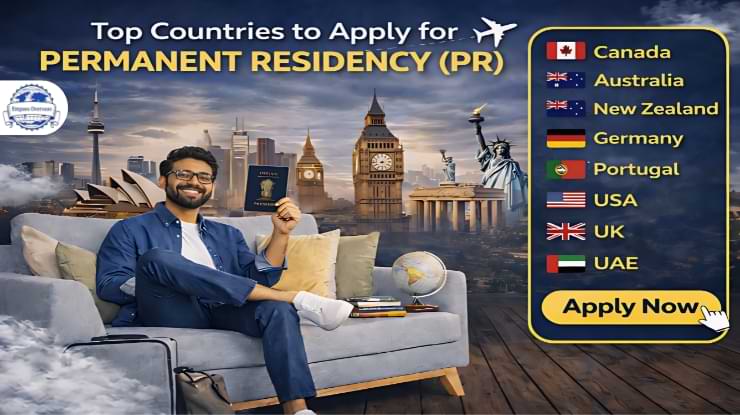
  • Top Countries to Apply for Permanent Residency (PR)

    Top Countries to Apply for Permanent Residency (PR)

    Planning to settle abroad permanently in 2026? Choosing the right country for Permanent Residency (PR) can open doors to global career opportunities, quality education, healthcare benefits, and long-term security for you and your family.

    With changing immigration policies and increasing demand for skilled professionals worldwide, selecting the best PR destination has never been more important. In this guide, Empass Overseas highlights the top countries to apply for PR in 2026, along with eligibility pathways and benefits.

    Permanent Residency allows you to live, work, and study indefinitely in a foreign country without time restrictions. PR holders enjoy most citizen benefits except voting rights, and many countries offer a clear pathway to citizenship after a few years.

    Benefits of Permanent Residency

    🔹Freedom to live and work without sponsorship

    🔹Access to public healthcare and education

    🔹Family sponsorship opportunities

    🔹Better global mobility

    🔹Eligibility for citizenship in the future

    Canada remains the most preferred PR destination due to its transparent immigration system and immigrant-friendly policies.

    Key PR Programs:

    1. Express Entry System
    2. Provincial Nominee Program (PNP)

    Why Choose Canada?

    1. Points-based PR system
    2. Universal healthcare
    3. Strong job market for skilled professionals
    4. Citizenship eligibility after 3 years

    Best for: IT professionals, healthcare workers, engineers, accountants. Austria offers multiple work visa options depending on your skills, salary, and job role.

    Australia offers direct PR visas for skilled migrants and consistently ranks high in global living standards.

    Popular PR Pathways:

    1. Skilled Independent Visa (Subclass 189)
    2. Skilled Nominated Visa (Subclass 190)

    Key Benefits:

    1. Direct PR status
    2. Medicare access
    3. Excellent work-life balance
    4. Citizenship after 4 years

    Best for: Skilled workers, engineers, healthcare professionals

    New Zealand is ideal for those seeking a safe, stable, and scenic lifestyle with solid PR options.

    PR Routes:

    1. Skilled Migrant Category
    2. Work-to-Residence programs

    Why New Zealand?

    1. Simple PR transition
    2. Strong work rights
    3. Public healthcare access
    4. Citizenship after 5 years

    Germany is one of Europe’s top destinations for skilled professionals, especially in STEM fields.

    PR Pathway:

    1. EU Blue Card → Permanent Residence

    Advantages:

    1. PR in as little as 21–33 months
    2. Free or low-cost education
    3. Access to the entire EU market
    4. Strong employee protections

    5. Portugal – Easy PR & Citizenship Route

    Portugal is known for its flexible residency rules and fast track to citizenship.

    PR Options:

    1. Work Permit → PR
    2. Golden Visa Program

    Why Portugal?

    1. Citizenship after 5 years
    2. Visa-free Schengen travel
    3. Affordable cost of living
    4. Excellent climate

    Singapore attracts professionals with its low taxes and global business environment.

    PR Eligibility:

    1. Employment Pass holders
    2. Skilled professionals & investors

    Benefits:

    1. High salaries
    2. World-class infrastructure
    3. Subsidised healthcare
    4. Stable economy

    The UK offers PR through Indefinite Leave to Remain (ILR) after a qualifying stay.

    PR Pathways:

    1. Skilled Worker Visa
    2. Family visas

    Key Benefits:

    1. Access to NHS healthcare
    2. Strong education system
    3. Citizenship after 6 years

    8. United States – Green Card Opportunities

    The US provides Permanent Residency through the Green Card system.

    Main Routes:

    1. Employment-based sponsorship
    2. Family sponsorship
    3. Diversity Visa Lottery

    Advantages:

    1. Global career exposure
    2. Strong economy
    3. Citizenship after 5 years

    9. UAE – Long-Term Residency (Golden Visa)

    While the UAE does not offer PR or citizenship, its Golden Visa provides long-term residency benefits.

    Highlights:

    1. 5 or 10-year residency
    2. Tax-free income
    3. Business-friendly environment

    Factors to Consider Before Applying for PR

    Before choosing a PR destination, consider:

    🔹Age and qualifications

    🔹Work experience

    🔹Language proficiency (IELTS / PTE)

    🔹Occupation demand

    🔹Cost of living

    🔹PR processing time

    At Empass Overseas, we provide end-to-end PR assistance, including:

    🔹Profile evaluation

    🔹Country and visa selection

    🔹Documentation and filing

    🔹IELTS & PTE guidance

    🔹Post-landing support

    Our experts help you choose the right country and fastest PR pathway based on your profile.
  • 🇦🇹Austria Work Visa Guide 2026

    🇦🇹Austria Work Visa Guide 2026

    Dreaming of working in Austria? With its strong economy, excellent work-life balance, and high standard of living, Austria is one of Europe’s most attractive destinations for skilled professionals.

    If you’re planning to move to Austria for work, understanding the Austria work visa requirements and application process is the first and most important step — and that’s exactly where Empass Overseas comes in.

    This complete guide covers Austria work visa types, eligibility, documents, processing time, and how to apply successfully.

    If you are a non-EU, non-EEA, or non-Swiss citizen, you must apply for an Austrian work visa or residence permit before starting employment.

    You need an Austrian work visa if you:

    🔹Are a skilled professional with a job offer in Austria

    🔹Are you a graduate or experienced worker applying under a points-based system

    🔹Plan to work long-term in Austria

    You do NOT need a work visa if you:

    🔹Are a citizen of the EU, EEA, or Switzerland (local registration is still required)

    Austria offers multiple work visa options depending on your skills, salary, and job role.

    🔴 Red-White-Red Card

    The most popular Austria work permit for skilled professionals. It is points-based and considers:

    1. Education and qualifications
    2. Work experience
    3. Age
    4. Language skills
    5. Salary offered

    🔴 Red-White-Red Card Plus

    Allows greater job flexibility after completing the initial employment period.

    🔴 EU Blue Card

    For highly qualified professionals with recognised degrees and higher salary thresholds.

    🔴 Employer-Specific Work Permit

    Linked to a single employer and job role.

    🔴 Seasonal Work Permit

    For short-term employment in sectors like tourism and agriculture.

    🔴 Intra-Company Transfer (ICT) Permit

    For employees transferred to Austria within multinational companies.

    🔴 Self-Employed / Start-Up Visa

    Ideal for entrepreneurs with innovative business ideas that benefit the Austrian economy.

    Your job offer plays a crucial role in visa approval. Austrian authorities assess:

    1. A valid employment contract with role, salary, and working hours
    2. Salary meets Austrian minimum wage standards
    3. Qualifications relevant to the position
    4. Employer compliance with labour laws
    5. Labour market checks were applicable

    💡 Even a strong profile can be rejected if the job offer does not meet visa standards.

    To apply for an Austrian work visa, you typically need:

    🔹Valid passport

    🔹Job offer or employment contract

    🔹Educational certificates

    🔹Proof of work experience

    🔹Proof of accommodation in Austria

    🔹Health insurance coverage

    🔹Police clearance certificate

    🔹Completed application forms

    🔹Visa application fee

    🔹Biometric data (if required)

    📌 Documents may need translation and legalisation — errors here are a common reason for delays.

    Step 1: Secure a Job Offer

    Obtain a valid job offer from an Austrian employer.

    Step 2: Choose the Right Visa Type

    Selecting the correct visa category is critical for approval.

    Step 3: Prepare Your Documents

    Ensure all documents are accurate, complete, and properly formatted.

    Step 4: Submit Your Application

    Apply through the Austrian embassy, consulate, or competent authority.

    Step 5: Application Review

    Authorities verify your profile, employer details, and compliance.

    Step 6: Biometrics or Interview

    Some applicants may be required to attend an appointment.

    Step 7: Visa Approval

    Once approved, you can enter Austria and collect your residence card.

    Step 8: Post-Arrival Registration

    Register your address and complete local formalities after arrival.

    Austria Work Visa Processing Time

    🔹Average processing time: 8 to 12 weeks

    🔹Processing may vary based on visa type and application accuracy

    Applying early and submitting error-free documents can significantly reduce delays.

    Austria Work Visa FAQs

    Can my family join me in Austria?

    Yes. Eligible dependents can apply for family reunification visas.

    Is the German language mandatory?

    German is not always required for the visa, but basic knowledge improves job prospects and integration.

    Can an Austrian work visa lead to permanent residency?

    Yes. After continuous legal residence and meeting integration criteria, you can apply for permanent residency.

    Can I change employers in Austria?

    Job changes may require approval or a new permit, depending on your visa type.

    At Empass Overseas, we don’t just file applications — we strategise your success.

    ✅ What We Offer:

    1. Free eligibility assessment
    2. Austria work visa category selection
    3. Job offer evaluation
    4. End-to-end documentation support
    5. Application filing & follow-ups
    6. Post-arrival guidance

    🌍 With expert consultants and a proven process, we make your Austria career journey smooth, transparent, and successfu

  • How to Improve Your Canada Express Entry CRS Score

    How to Improve Your Canada Express Entry CRS Score

    Canada’s Express Entry system is one of the fastest and most popular pathways to gain Canadian permanent residency ( PR). Campaigners are ranked using the Comprehensive Ranking System(CRS), and only biographies with competitive scores are admitted an Invitation to Apply( ITA). 

    Still, don’t worry, if your CRS score is below the recent cut- offs. With the right strategy and expert guidance, you can significantly ameliorate your score. In this companion, Empass Overseas explains the most effective ways to boost your CRS score and improve your chances of Canadian PR.

    The Comprehensive Ranking System (CRS) is a points-based system used by Immigration, Refugees and Citizenship Canada (IRCC) to rank Express Entry candidates. Profiles are scored out of 1,200 points based on:

    🔹Age

    🔹Education

    🔹Language proficiency

    🔹Work experience

    🔹Skill transferability

    🔹Additional factors (PNP, job offer, relatives in Canada, etc.)

    The higher your CRS score, the better your chances of receiving an ITA.

    Your CRSscore is calculated based on four main categories:

    1. Core Human Capital Factors

    1. Age
    2. Education
    3. Language skills (IELTS / CELPIP / TEF)
    4. Canadian work experience

    2. Spouse or Partner Factors (if applicable)

    1. Education
    2. Language proficiency
    3. Work experience

    3. Skill Transferability Factors

    1. Education + language ability
    2. Education + work experience
    3. Foreign work experience + language ability

    4. Additional CRS Points

    1. Provincial Nomination (PNP)
    2. Valid job offer
    3. Canadian education
    4. French language skills
    5. Sibling in Canada

    1. Apply for a Provincial Nominee Program (PNP)

    A Provincial Nomination is the most powerful way to increase your CRS score. A successful PNP nomination adds 600 additional CRS points, almost guaranteeing an ITA.

    🔹Canadian provinces like Ontario, Alberta, Saskatchewan, British Columbia, and Nova Scotia regularly invite candidates based on occupation demand and CRS score.

    Empass Overseas helps you identify the right PNP stream based on your profile.

    2. Improve Your Language Test Scores

    Language proficiency plays a major role in CRS scoring. Even a small improvement in IELTS or CELPIP scores can significantly increase your total points.

    🔹Aim for CLB 9 or higher

    🔹Reattempt IELTS if required

    🔹Consider French (TEF) for additional bonus points

    Bilingual candidates can earn extra CRS points.

    3. Gain More Work Experience

    Work experience—especially Canadian work experience—adds strong value to your CRS score.

    🔹More years of skilled work = higher points

    🔹Canadian experience earns more points than foreign experience

    🔹Combine experience with strong language scores for skill transferability points

    4. Upgrade Your Education

    Higher education directly improves your CRS score. Completing an additional degree, diploma, or certification can make a big difference.

    🔹Ensure your Educational Credential Assessment (ECA) is updated

    🔹Canadian education provides extra CRS points

    5. Maximize Skill Transferability Points

    Skill transferability allows you to earn extra points by combining:

    🔹Education + language skills

    🔹Foreign work experience + language skills

    🔹Education + Canadian work experience

    This section alone can add up to 100 CRS points if optimized correctly.

    6. Include Your Spouse Strategically

    If you are married or have a partner, your spouse’s qualifications can contribute to your CRS score.

    🔹Spouse’s IELTS scores

    🔹Spouse’s education and ECA

    🔹Spouse’s work experience

    In some cases, applying without a spouse may result in a higher CRS score. Our experts can guide you on the best option.

    7. Secure a Valid Job Offer in Canada

    A job offer supported by LMIA can add 50 to 200 CRS points, depending on the role and NOC category.

    This significantly increases your chances of receiving an ITA.

    8. Claim Additional CRS Points

    You may qualify for extra points if:

    🔹You have a sibling who is a Canadian PR or citizen

    🔹You studied in Canada

    🔹You have strong French language skills

    Every additional point matters in Express Entry draws.

    At Empass Overseas, we provide end-to-end support for your Canada PR journey:

    🔹CRS score evaluation

    🔹Express Entry profile creation

    🔹PNP identification and application

    🔹IELTS & documentation guidance

    🔹End-to-end PR application support

    Our expert consultants help you choose the fastest and most effective strategy to improve your CRS score.

    Conclusion

    Improving your Canada Express Entry CRS score is achievable with the right planning and professional guidance. Whether it’s boosting your language scores, securing a provincial nomination, or upgrading your education, every step brings you closer to your Canadian PR dream.

    Contact Empass Overseas today for a personalized CRS assessment and start your journey to Canada with confidence.

  • Australia 485 Visa – Post Study Work Opportunities

    Australia 485 Visa – Post Study Work Opportunities

    Australia is one of the top destinations for international students, not only for quality education but also for excellent post-study work opportunities. The Temporary Graduate Visa (Subclass 485) allows international graduates to stay back in Australia, gain valuable work experience, and explore pathways to permanent residency.

    At Empass Overseas, we help students successfully transition from student life to professional careers in Australia through expert visa guidance.


    The Temporary Graduate Visa (Subclass 485) is a post-study work visa that enables international students who have completed their studies in Australia to:

    ✔ Live and work in Australia
    ✔ Gain full-time professional experience
    ✔ Improve eligibility for skilled migration
    ✔ Explore employer sponsorship and PR options

    This visa is ideal for students who want to maximize their return on investment after studying in Australia.

    1. Post-Study Work Stream

    This stream is for international students who complete higher education degrees in Australia.

    Eligible Qualifications:

    1. Bachelor’s Degree
    2. Master’s Degree (Coursework/Research)
    3. Doctoral Degree (PhD)

    Visa Duration:

    1. Bachelor’s: Up to 2 years

    2. Master’s: Up to 3 years

    3. PhD: Up to 4 years (Additional extensions may apply for regional study)

    This is the most popular option for students aiming for long-term settlement in Australia.

    2. Graduate Work Stream

    This stream is suitable for students who have completed vocational or trade qualifications linked to occupations on Australia’s Skilled Occupation List (SOL).

    Key Highlights:

    1. Stay duration: Up to 18 months

    2. Requires a positive skills assessment

    3. Ideal for trade, technical, and diploma graduates

    3. Regional Study Benefits

    Students who study and live in regional Australia may receive extended post-study work rights, offering extra time to gain Australian experience and improve PR chances.

    To apply for the 485 visa, you must:

    ✔ Be under 50 years of age
    ✔ Hold a valid or recently expired Student Visa (Subclass 500)
    ✔ Complete a CRICOS-registered course
    ✔ Meet English language requirements
    ✔ Apply within the stipulated time after course completion
    ✔ Meet health and character requirements
    ✔ Hold valid Overseas Student Health Cover (OSHC)

    Each stream has specific additional requirements.

    One of the biggest advantages of the 485 visa is unrestricted work rights.

    You can:

    🔹Work full-time in any industry

    🔹Change employers freely

    🔹Gain Australian work experience

    🔹Take up professional, skilled, or casual jobs

    International graduates commonly find jobs in:

    🔹 Information Technology (IT & Software)
    🔹 Engineering & Construction
    🔹 Healthcare & Nursing
    🔹 Accounting & Finance
    🔹 Business, Marketing & HR
    🔹 Hospitality & Tourism
    🔹 Trades & Technical Occupations

    Australian work experience significantly boosts your profile for PR pathways.

    The Australia 485 visa is a stepping stone to PR. After gaining work experience, you may qualify for:

    ⭐ Skilled Independent Visa (Subclass 189)
    ⭐ Skilled Nominated Visa (Subclass 190)
    ⭐ Skilled Work Regional Visa (Subclass 491)
    ⭐ Employer Sponsored Visas (Subclass 186 / 482)
    ⭐ Partner or Family Migration Options

    Strategic planning during your 485 visa period is crucial — and Empass Overseas helps you plan it right.

    Visa Application Fee:

    🔹 Starts from approx. AUD 1,895 (main applicant)

    Processing Time:

    🔹 Usually 3 to 6 months, depending on case complexity

    Additional costs may include:

    🔹 English test fees

    🔹 Medical examination

    🔹 Police clearance certificates

    🔹 Health insurance

    ✔ Expert Australia student & post-study visa consultants
    ✔ End-to-end visa guidance
    ✔ Career-oriented migration planning
    ✔ Transparent & genuine services
    ✔ High visa success rate

    We don’t just help you apply — we help you succeed in Australia.

    1. Can I apply for PR directly after 485 visa?

    Not directly, but the Australian work experience gained on a 485 visa helps you qualify for skilled PR visas.

    2. Can I work full-time on a 485 visa?

    Yes. There are no work restrictions on a Temporary Graduate Visa.

    3. Is IELTS mandatory for 485 visa?

    Yes, English language proficiency is required, but alternatives like PTE may also be accepted.

    4. Can my family join me on a 485 visa?

    Yes, eligible dependents can be included in your visa application.

    5. When should I apply for a 485 visa?

    You must apply within the specified time after course completion. Timing is critical.

    🎓 Studied in Australia and planning your next step?
    💼 Want to work, settle, or apply for PR?

    📞 Contact Empass Overseas today for expert guidance on the Australia 485 Visa and post-study career planning.

    Your Australian dream doesn’t end with graduation — it starts there! 🇦🇺

  • Why ANZSCO Codes Are Important for Australia PR

    Why ANZSCO Codes Are Important for Australia PR

    Your ANZSCO code directly impacts your visa. ANZSCO Codes for Australia Skilled Migration.

    Planning to migrate to Australia under the Skilled Migration Program? One of the most critical steps in your journey is selecting the correct ANZSCO code. At Empass Overseas, we help skilled professionals choose the right occupation, pass skill assessments, and apply confidently for Australian PR.

    ANZSCO stands for Australian and New Zealand Standard Classification of Occupations. It is an official system used by the Australian Government to classify occupations based on job role, skills, qualifications, and responsibilities.

    Each occupation is assigned a unique 6‑digit ANZSCO code, which is used during:

    1. Australia Skilled Visa applications
    2. Skill assessments by assessing authorities
    3. Expression of Interest (EOI) submission: Eligibility and Approval Chances. Here’s why it matters:

    ✅ Determines Visa Eligibility

    Only occupations listed on Australia’s Skilled Occupation Lists (SOL, MLTSSL, STSOL, ROL) are eligible for skilled visas.

    ✅ Skill Assessment Accuracy

    Your education and work experience are evaluated strictly in accordance with the duties listed under your ANZSCO code.

    ✅ Points Test Outcome

    Incorrect ANZSCO selection may lead to points rejection or visa refusal.

    ✅ State & Regional Nomination

    States nominate candidates based on specific ANZSCO occupation demands.

    👉 A wrong ANZSCO code = rejection risk

    ANZSCO codes follow a 6‑digit hierarchical structure:

    🔹1st Digit – Major occupation group (e.g., Professionals)

    🔹2nd Digit – Sub‑major group (e.g., ICT Professionals)

    🔹3rd Digit – Minor group

    🔹Last 3 Digits – Specific occupation

    Example:

    🔹261313 – Software Engineer

    🔹261111 – ICT Business Analyst

    🔹233211 – Civil Engineer

    🔹241111 – Early Childhood Teacher

    Each code includes:

    🔹Occupation title

    🔹Skill level

    🔹Job description

    🔹Required qualifications

    Occupation

    ANZSCO Code

    Software Engineer

    261313

    ICT Business Analyst

    261111

    Civil Engineer

    233211

    Mechanical Engineer

    233512

    Registered Nurse

    254499

    Early Childhood Teacher

    241111

    Accountant (General)

    221111

    Electrician

    341111

    Demand may vary based on state and year.

     ANZSCO occupations are grouped into five skill levels:

    🔹 Skill Level 1

    Requires a Bachelor’s degree or higher. Examples: Engineers, IT Professionals, Doctors

    🔹 Skill Level 2

    Requires Diploma / Advanced Diploma. Examples: Technicians, Associate Engineers

    🔹 Skill Level 3–5

    Requires trade certificates or on-the-job training. Examples: Electricians, Chefs, Technicians

    Skill level affects:

      ~ Visa eligibility

      ~ Assessing authority requirements

      ~  Points calculation

    Selecting the correct ANZSCO code depends on your job duties, not job title.

    Step‑by‑Step Guide:
    1. Analyze Your Daily Job Responsibilities

    2. Match Duties with ANZSCO Task Descriptions

    3. Verify Qualification Requirements

    4. Check Eligible Visa Types

    5. Confirm Assessing Authority Requirements

    ⚠️ Choosing the wrong code can result in skill assessment failure.

    Each ANZSCO occupation has a designated assessing authority, such as:

      ~ ACS – IT Professionals

      ~ Engineers Australia – Engineers

      ~ VETASSESS – General occupations

      ~ ANMAC – Nurses

      ~ AITSL – Teachers

      ~ TRA – Trade occupations

    Your documents must match the ANZSCO description exactly

    ANZSCO codes are required for:

      ~ Subclass 189 – Skilled Independent Visa

      ~ Subclass 190 – Skilled Nominated Visa

      ~ Subclass 491 – Skilled Work Regional Visa

      ~ Employer-Sponsored Visas

    Correct ANZSCO selection improves:

    🔹EOI ranking

    🔹State nomination chances

    🔹PR approval success

    Insufficient salary
    ❌ Improper document attestation
    ❌ Incomplete medical insurance
    ❌ Incorrect relationship proof
    ❌ Expired passports 

    At Empass Overseas, we provide:

    ✔ Accurate ANZSCO code evaluation

    ✔ Skill assessment assistance

    ✔ EOI & points calculation support

    ✔ State nomination guidance

    ✔ End‑to‑end Australia PR processing

    Our experts ensure 100% compliance with Australian migration standards.

    ANZSCO codes form the foundation of Australia’s Skilled Migration. Selecting the right code is not optional — it’s essential. With professional guidance, you can avoid costly errors and move one step closer to your Australian Permanent Residency dream.

    📞 Get expert ANZSCO assessment today with Empass Overseas 🌐 Visit: www.empassoverseas.com

    1. Can I change my ANZSCO code after EOI submission?
    Yes, but it may require a new skill assessment.

    2. Can one job title have multiple ANZSCO codes?
    Yes. Selection depends on duties performed.

    3. Is ANZSCO required for student visas?
    No. It is mandatory only for skilled and PR visas.

    4. Does ANZSCO change every year?
    Updates occur periodically; expert advice is recommended.

  • Dubai Dependent Visa Guide 2026

    Dubai Dependent Visa Guide 2026

    Relocating to Dubai is a life-changing opportunity, and bringing your family along makes it even more meaningful. The Dubai Dependent Visa 2026 allows UAE residents to sponsor their immediate family members so they can live together legally in the UAE.

    At Empass Overseas, we simplify the dependent visa process with expert guidance, accurate documentation, and end-to-end support — ensuring a smooth experience for you and your loved ones.

    A Dubai Dependent Visa is a UAE residence visa that allows expatriate residents to sponsor their family members, including spouses, children, and parents. This visa enables dependents to live, study, and access healthcare in Dubai legally.

    For 2026, the UAE continues to focus on family-friendly residency policies while maintaining clear financial and legal eligibility criteria.

    To sponsor dependents in Dubai, the applicant must:

    1. Hold a valid UAE residence visa
    2. Be employed or self-employed in the UAE
    3. Meet the minimum salary requirement
    4. Have registered accommodation in the UAE
    5. Possess valid health insurance for dependents

    Minimum Salary Requirement (2026)

    1. Spouse & Children: AED 4,000 per month or AED 3,000 + employer-provided accommodation
    2. Parents: Typically AED 20,000+ per month, along with proof of sole dependency

    Salary thresholds may vary slightly depending on the emirate and profession.

    Who Can Be Sponsored as a Dependent?

    The following family members are eligible under the Dubai dependent visa rules in 2026:

    Spouse

    🔹 Marriage certificate must be legally attested

    Children

    🔹 Sons: Can be sponsored up to 25 years of age

    🔹 Daughters: Can be sponsored until marriage

    🔹 Children of determination (special needs): No age restriction

    Parents

    🔹 Both parents must be sponsored together (exceptions apply)

    🔹 Proof of dependency and higher income required

    Applicants must submit the following:

    1. Sponsor’s passport & UAE residence visa copy
    2. Dependent’s passport (minimum 6 months validity)
    3. Passport-size photographs
    4. Attested marriage certificate/birth certificate
    5. Salary certificate or labour contract
    6. Tenancy contract (Ejari)
    7. Emirates ID of the sponsor
    8. Medical insurance policy
    9. Medical fitness certificate (for dependents aged 18+)

    The home country authorities, the UAE embassy, and MOFA must attest all relationship documents.

    Step 1: Eligibility Check

    Confirm salary, visa validity, and accommodation requirements.

    Step 2: Entry Permit Application

    Apply for the dependent entry permit through GDRFA or authorized typing centers.

    Step 3: Medical Fitness Test

    Dependents above 18 must complete medical tests at approved UAE centers.

    Step 4: Emirates ID Registration

    Biometric capture and Emirates ID application for dependents.

    Step 5: Visa Stamping

    Final residence visa stamping completes the process.

    Processing time typically ranges from 2–4 weeks, depending on document readiness.

    Validity & Renewal Rules (2026)

    🔹Dependent visas are usually valid for 1–2 years

    🔹Visa validity is aligned with the sponsor’s visa

    🔹Renewal must be done before expiry to avoid fines

    No. Dependents cannot work on a dependent visa.
    If a dependent secures employment, the visa must be converted to an employment visa under the employer’s sponsorship.

    Insufficient salary
    ❌ Improper document attestation
    ❌ Incomplete medical insurance
    ❌ Incorrect relationship proof
    ❌ Expired passports

    Professional guidance significantly reduces rejection risks.


    ✔ Updated 2026 visa rules & compliance
    ✔ Document attestation assistance
    ✔ Entry permit to visa stamping support
    ✔ Transparent process & expert consultation
    ✔ High success rate

    At Empass Overseas, we ensure your family’s move to Dubai is stress-free, compliant, and fast.

    1. What is the minimum salary to sponsor a dependent in Dubai in 2026?

    To sponsor a spouse or children, the minimum salary requirement is AED 4,000 per month, or AED 3,000 with employer-provided accommodation. Sponsoring parents usually requires a higher salary, often AED 20,000 or more.

    2. Can a wife sponsor her husband in Dubai?

    Yes. A woman can sponsor her husband if she meets the required salary criteria and works in an eligible profession. Additional approval may be required depending on the emirate.

    3. How long does it take to process a Dubai dependent visa?

    The processing time typically ranges from 2 to 4 weeks, depending on document verification, medical results, and immigration approvals.

    4. Is medical insurance mandatory for dependents in Dubai?

    Yes. Health insurance is mandatory for all dependents in Dubai and must be active during the visa application and throughout the residency period.

    5. Can dependents work in Dubai on a dependent visa?

    No. Dependents are not allowed to work on a dependent visa. If employment is secured, the visa must be converted to an employer-sponsored employment visa.

    6. What is the age limit for sponsoring children in 2026?

    • Sons: Up to 25 years

    • Daughters: No age limit until marriage

    • Children of determination: No age restrictions

    7. Can I sponsor my parents in Dubai?

    Yes, but you must sponsor both parents together, meet higher salary requirements, and provide proof that you are their sole financial supporter.

    8. Is document attestation mandatory for a dependent visa?

    Yes. Marriage and birth certificates must be officially attested by the issuing country, UAE embassy, and the Ministry of Foreign Affairs (MOFA) in the UAE.

    9. What happens if my dependent visa expires?

    If a dependent visa expires, a grace period may apply. Failure to renew within this period can result in daily fines and legal complications.

    10. Can stepchildren be sponsored under a Dubai dependent visa?

    Yes, stepchildren can be sponsored with additional documentation, including consent from the biological parent and legal custody proof.

    11. Can dependents study in Dubai?

    Yes. Dependents are allowed to study in schools and universities in Dubai without changing their visa status.

    12. Why should I apply through Empass Overseas?

    Empass Overseas offers expert guidance, updated 2026 compliance, document attestation support, faster processing, and a higher success rate for Dubai dependent visa applications.
  • U.S. Visit Visa (B-1/B-2): Complete Guide for Indian Travelers

    U.S. Visit Visa (B-1/B-2): Complete Guide for Indian Travelers

    Travelling to the United States is a dream for millions around the world. Whether you want to explore iconic destinations like New York and Las Vegas, visit family members, attend a conference, or seek short-term medical treatment, the U.S. Visit Visa (B-1/B-2) is the gateway to fulfilling your purpose.

    At Empass Overseas, we specialize in simplifying the entire visa application process — from preparing the DS-160 form to interview guidance — ensuring your application is accurate, complete, and aligned with U.S. consulate expectations.

    The U.S. Visit Visa is a non-immigrant visa issued to individuals who want to travel to the United States temporarily. It comes in two categories:

    🔹 B-1 Visa – Business Visitor

    Ideal for travelers visiting the U.S. for:

    1. Business meetings
    2. Negotiating contracts
    3. Corporate events
    4. Industry conferences
    5. Attending short-term training
    🔹 B-2 Visa – Tourist / Visitor Visa

    Suitable for:

    1. Tourism & sightseeing
    2. Visiting friends or relatives
    3. Short recreational courses
    4. Medical treatment
    5. Family events
    6. Social gatherings

    Most Indian applicants apply for a combined B-1/B-2 visa, which covers both business and tourism purposes.

    ✔ Long Visa Validity

    Indian travelers often receive a visa valid for up to 10 years with multiple entries.

    ✔ Flexible Stay Duration

    You may stay for up to 6 months per visit, depending on the entry stamp provided by U.S. Customs and Border Protection (CBP).

    ✔ Multiple Travel Purposes Covered

    A single visa can be used for:

    1. Tourism
    2. Family visits
    3. Business meetings
    4. Short-term medical needs
    ✔ Freedom to Travel Across the U.S.

    Once admitted, you can explore all states, major cities, national parks, and tourist landmarks.

    You are eligible to apply if:

    1. –  You intend to visit the U.S. temporarily
    2. You have sufficient funds for travel
    3. You can show that you will return to India after your trip
    4. You meet U.S. immigration regulations

    The consulate places strong emphasis on the purpose of visit and the Genuine Intent to Return.

    You must prepare documents carefully to avoid interview complications. Below is a complete list you may need:

    🔹 Mandatory Documents+
    1. Valid passport
    2. DS-160 confirmation page
    3. Visa fee payment receipt
    4. U.S. visa appointment confirmation
    5. Recent passport-size photograph
    🔹 Proof of Financial Capability
    1. Bank statements (last 6 months)
    2. Income Tax Returns
    3. Salary slips or employment proof
    4. Fixed deposits or investments
    🔹 Proof of Ties to Home Country

    To prove that you intend to return:

    1. Employment letter/business registration
    2. Property documents
    3. Family ties (spouse/children in India)
    4. Academic enrollment (for students)
    🔹 Travel & Accommodation Evidence
    1. Tentative travel plan
    2. Hotel bookings/invitation letters
    3. Event or conference details (for business)
    🔹 Additional Documents (if applicable)
    1. Medical letters (for treatment)
    2. Business meeting invites
    3. Sponsorship letters from family in the U.S.

    Preparing a strong set of documents boosts your chances of approval.

    Step-by-Step Application Process

    At Empass Overseas, we guide you through each stage. Here’s how the process works:

    Step 1:Choose Visa Type (B-1, B-2, or B-1/B-2)
    1. Select the category that best suits your purpose. Most applicants opt for the combined visa.
    Step 2: Complete DS-160 Form

    The DS-160 is the most critical part of the application. Mistakes can result in:

    1. Visa denial
    2. Rejections in future applications
    3. Additional administrative delays

    Empass Overseas ensures your DS-160 is:

    1. Accurate
    2. Consistent
    3. Aligned with your purpose
    Step 3: Pay the Visa Fee
    1. The fee is currently USD $185 (subject to change).
    Step 4: Schedule Appointments

    You must book:

    1. VAC appointment (fingerprints & photo)
    2. Consulate interview

    Appointment wait times can vary from city to city.

    Step 5: Attend Your Visa Interview

    This is the most important stage. The officer will assess:

    1. Purpose of travel
    2. Your financial status
    3. Your intent to return
    4. Your overall credibility

    We help you prepare with:

    1. Sample questions
    2. Confidence-building sessions
    3. Presentation tips
    Step 6: Visa Processing & Outcome

    If approved:

    1. Your passport is collected
    2. Visa is stamped and returned within a few days

    If denied, the officer will give a reason under a specific section of immigration law.

    The UK offers a rich combination of culture, heritage, and modern experiences:

    🔹 Historic landmarks

    🔹 World-renowned museums and universities

    🔹 Diverse food and entertainment

    🔹 Beautiful countryside

    🔹 A large and welcoming Indian community

    Whether you’re travelling for leisure, family visits, or professional reasons, the UK provides a rewarding experience for every type of visitor. success.

    Common Reasons for Visa Rejection

    Many refusals happen due to avoidable mistakes. The most common reasons include:

    ❌ Weak home-country ties

    ❌ Insufficient financial evidence

    ❌ Poor interview responses

    ❌ Inconsistent information in DS-160

    ❌ Lack of clarity of purpose

    ❌ Suspicion of immigrant intent

    With expert guidance, these issues can be mitigated.

    Our team provides end-to-end assistance tailored to your personal case.

    ✔ Visa Category Selection

    Choosing the correct visa type is crucial — we guide you based on your purpose.

    ✔ DS-160 Form Filing

    We complete this complex form accurately and error-free.

    ✔ Document Preparation

    We build a strong profile with all necessary documents.

    ✔ Interview Training

    We help you prepare confident, genuine responses to commonly asked questions.

    ✔ Travel & Itinerary Guidance

    We help you present a realistic and clear travel plan.

    ✔ Personalized Strategy

    Every applicant is different — we structure your case accordingly.

    With our expertise, your application becomes significantly stronger and more credible.

    1. How long can I stay in the U.S. with a B-1/B-2 visa?

    You can stay up to 6 months per visit, depending on the entry officer’s discretion.

    2. Does a U.S. Visit Visa guarantee entry into the U.S.?

    No — the visa allows you to travel, but the CBP officer at the port of entry makes the final decision.

    3. Can I extend my stay while in the U.S.?

    Yes, you may apply for an extension using Form I-539, but approval is not guaranteed.

    4. Can I work on a visitor visa?

    No. Employment is strictly prohibited.

    5. Can I convert my Visit Visa into another visa inside the U.S.?

    In some cases (e.g., student visa), it may be possible — but it depends on eligibility and legal rules.

    Tips to Improve Your Chances of Approval

    ✔ Be confident during your interview

    ✔ Provide clear, consistent answers

    ✔ Show strong ties to your home country

    ✔ Carry the correct documents

    ✔ Avoid unnecessary details or lengthy explanations

    ✔ Present a genuine, realistic travel plan

    Conclusion

    A U.S. Visit Visa is one of the most sought-after visas for Indian travelers. While the process may seem complex, the right guidance and preparation can make it smooth and stress-free.

    At Empass Overseas, we help you navigate every step — from completing the DS-160 correctly to preparing for the consulate interview — ensuring your profile is presented with clarity and confidence.

    Whether you are planning a family vacation, a business trip, or visiting loved ones, we are here to support you with reliable, professional, and transparent visa assistance.

  • UK Visitor Visa — A Complete Guide for Indian Travelers

    UK Visitor Visa — A Complete Guide for Indian Travelers

    Travelling to the UK is a dream shared by many — whether it’s exploring London’s historical landmarks, reuniting with family and friends, attending short business events, or receiving medical treatment. The UK Visitor Visa is the most common pathway for short-term travel from India. This guide covers everything you need to know to plan your trip and apply smoothly.

    The UK Visitor Visa (also known as the Standard Visitor Visa) allows individuals to travel to the United Kingdom for short stays. It is suitable for:

    1. Tourism and holiday trips
    2. Visiting family or friends
    3. Short business visits
    4. Medical treatment
    5. Attending conferences or cultural events
    6. Short-term academic or professional engagements

    This visa does not permit employment or long-term stay in the UK.

    1. Standard Visitor Visa – tourism, family visits, short business or leisure trips
    2. Marriage/Civil Partnership Visitor Visa – for those planning to marry or register a civil partnership in the UK
    3. Permitted Paid Engagement Visa – for professionals invited for short-term engagements


    Who Is Eligible?

    To apply for a UK Visitor Visa from India, you must:

    1. Hold a valid passport with blank pages
    2. Prove you have enough funds to cover your stay, travel, accommodation, and daily expenses
    3. Provide details of where you will stay (hotel booking or host address)
    4. Submit a clear travel plan or itinerary
    5. Show strong ties to India (employment, family, property, studies) to prove you will return
    6. Submit previous passports or travel history, if available
    7. Provide additional documents depending on your purpose of visit (invitation letter, medical records, business letter, etc.)

    🔹Fill out the online visa application form

    Complete your application with accurate details matching your passport.

    🔹 Pay the visa fee

    Payment is made online during the application

    🔹 Book a biometric appointment

    Schedule a visit to a VFS centre in India for fingerprint and photograph collection.

    🔹 Submit your documents

    Carry your passport, application form, financial statements, accommodation proof, invitation letters, and other required documents.

    🔹 Wait for the decision

    Visa processing usually takes 2–3 weeks, but timelines may vary based on workload and verification.

      1. A Standard Visitor Visa typically allows a stay of up to 6 months.
      2. The most common fee is for the 6-month visa.
      3. Long-term options (2-year, 5-year, and 10-year visas) are available for frequent travellers, but each visit still allows a maximum stay of 6 months.
      4. Medical, academic, and special visit visas may have different fees and conditions.

    The UK offers a rich combination of culture, heritage, and modern experiences:

    🔹 Historic landmarks

    🔹 World-renowned museums and universities

    🔹 Diverse food and entertainment

    🔹 Beautiful countryside

    🔹 A large and welcoming Indian community

    Whether you’re travelling for leisure, family visits, or professional reasons, the UK provides a rewarding experience for every type of visitor. success.

    Common Mistakes to Avoid

    1. Insufficient proof of funds
    2. Weak proof of return to India
    3. Inconsistent or incorrect information on the application
    4. Submitting unclear or incomplete documents
    5. Applying too close to the travel date
    6. Submitting a well-organized and accurate application significantly improves your approval chances.

    At EmpassOverseas, we help you navigate the UK Visitor Visa process with ease. Our services include:

    1. Guidance on choosing the correct visa type
    2. Document checklist and preparation
    3. Assistance with online application and appointment booking
    4. Review of your financial and travel documents
    5. Professional support to avoid common mistakes
    6. Personalised guidance for strong visa representation

    Whether you are travelling for tourism, business, or family purposes, our visa experts ensure you apply confidently and correctly.

    If you’re planning a trip to the UK and want hassle-free visa support, EmpassOverseas is here to help you every step of the way.

  • Work Visa in New Zealand: Complete Guide for Applicants

    Work Visa in New Zealand: Complete Guide for Applicants

    New Zealand is one of the world’s most attractive destinations for skilled professionals. With its high living standards, transparent immigration system, and strong demand for skilled workers, the country has become a top choice for individuals seeking long-term global career opportunities.

    Through the Accredited Employer Work Visa (AEWV) program, New Zealand offers a legal and structured pathway for skilled migrants who have a full-time job offer from an accredited employer.

    What is the New Zealand Work Visa Program?

    The New Zealand Work Visa (AEWV) is designed for skilled professionals who receive a genuine full-time job offer (30+ hours per week) from an accredited employer. This visa allows foreign workers to live and work legally in New Zealand under specified conditions.

    Recent policy changes have also improved dependent/partner work rights, making it easier for families to move and settle together.

    To apply for the AEWV, you must generally meet the following criteria:

    1. A full-time job offer from a New Zealand-accredited employer
    2. Job that meets the required skill level and pay thresholds
    3. Relevant work experience or qualifications in the field
    4. Occupational registration or license if required (healthcare, engineering, etc.)
    5. Good health and character
    6. English proficiency for certain roles

    Meeting these requirements qualifies you to apply for the work visa.

    Required Documents

    You must prepare the following documents:

    1. Valid passport
    2. Employment agreement/job offer with all details
    3. Proof of qualifications (degrees, diplomas, certifications)
    4. Relevant work experience letters
    5. Professional registrations or licenses (if applicable)
    6. Medical examination and character certificates
    7. Dependent documents (if applying with family)

    🔹Eligibility Check & Job Offer Verification

    Ensure your job offer is genuine and the employer is accredited.

    🔹 Document Preparation

    Compile all professional, personal, and employer documents.

    🔹 Visa Application Submission

    Submit AEWV application with accurate information.

    🔹 Employer Job Check Compliance

    Employer must pass the job-check process confirming need for migrant worker.

    🔹 Visa Assessment & Decision

    Authorities evaluate your skills, job authenticity, and eligibility.

    🔹 Visa Approval & Relocation

    Receive your visa and prepare to travel to New Zealand.

    🔹 Dependent Visa Processing

    Partners and children can apply under specific criteria.

    Empass Overseas ensures error-free documentation, compliance checks, and end-to-end support.

    1. Falling for fake job offers
    2. Submitting incomplete or unverifiable documents
    3. Ignoring professional licensing requirements
    4. Violating visa conditions (job role, location, hours)
    5. Misunderstanding dependent eligibility rules

    Professional guidance can prevent these issues and improve approval chances by Empass Overseas

    Why Empass Overseas Recommends New Zealand

    New Zealand is ideal for skilled workers because it offers:

    1. Transparent immigration rules
    2. High demand for qualified professionals
    3. Legal, job-based migration opportunities
    4. Safe and family-friendly environment
    5. Strong career growth potential

    Empass Overseas helps applicants secure legitimate job offers, prepare documentation, and file successful visa applications.

    You are an ideal candidate if you want:

    🔹 Genuine job-based migration

    🔹 International work experience

    🔹 A stable and high-quality life abroad

    🔹 A trusted and transparent visa system

    Empass Overseas can evaluate your profile, verify job offers, and prepare your visa application for maximum success.

    Frequently Asked Questions (FAQs)

    1. Is a job offer mandatory for a New Zealand work visa?

    Yes, for the AEWV, a full-time job offer from an accredited employer is required.

    2. What is the minimum work experience needed?

    Generally 2+ years or specific qualifications depending on your occupation.

    3. Can my partner or spouse work in New Zealand?

    Yes, in many cases partners of skilled workers are eligible for open work rights.

    4. How long does the visa process take?

    Processing times vary but typically range from a few weeks to a few months depending on documentation and occupation.

    5. Can I change employers after getting my visa?

    You may need a new job-check or visa variation — rules depend on visa conditions.

    Empass Overseas provides a complete New Zealand migration service — from eligibility checks and job-offer verification to full application support.

    Ready to work in New Zealand? Contact Empass Overseas today for a personalized assessment.